Cole Redhorse Taylor (Mdewakanton Dakota) finds a balance between the natural and the man-made. Those opposing forces create dynamic opportunities within his work, including in form, texture and color. The natural parts of his work are quills, derived from porcupines, and buckskins, which come from animal hides. The man-made portions are glass beads. Though created in entirely different manners, they unite together beautifully in Taylor’s Minnesota studio.
Taylor works a variety of media, including painting and drawing, but he focuses much of his time on his bead and quill creations such as medallions and pendants, bags, moccasins and other wearable items.
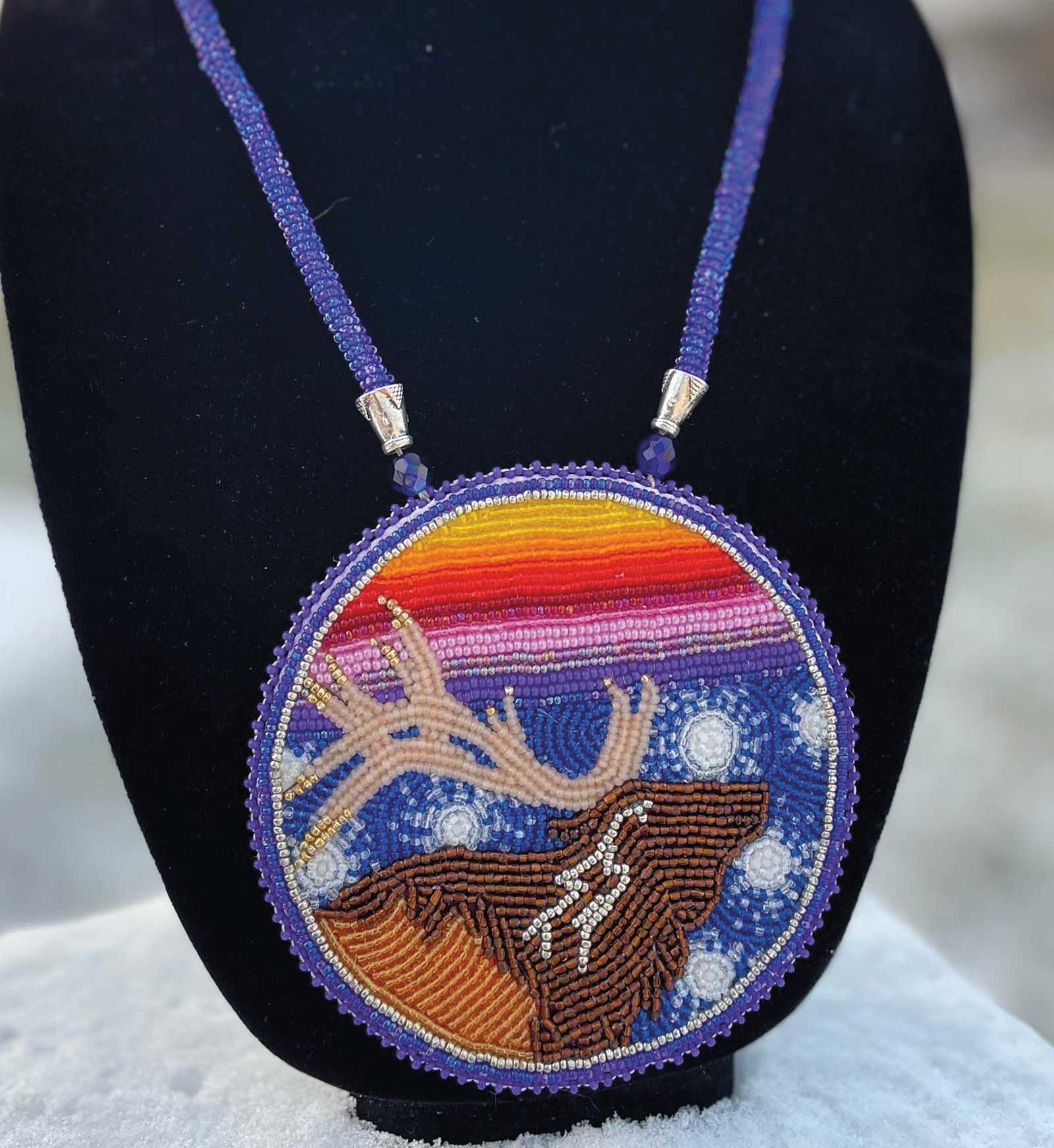 Elk Medallion, Czechoslovakian size 11 seed beads and sterling silver beads, 4”
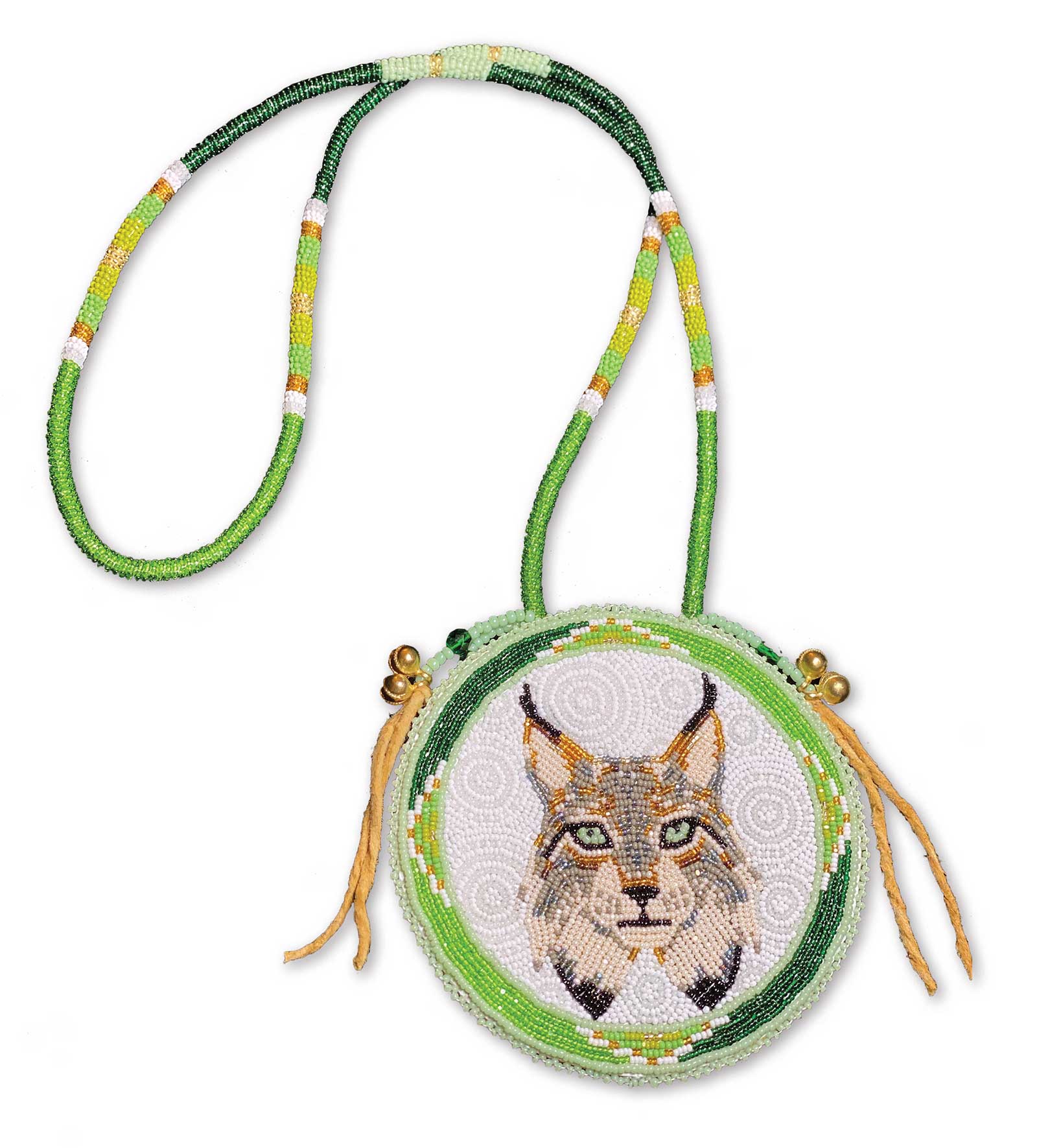 Ihmu Medallion, Czechoslovakian size 13 seed beads and vintage beads, 3”
“I collect the beads wherever I can get them. I will buy contemporary beads, but I’m also always looking for older vintage beads, which can be harder to find. I’m a bead horder, that’s for sure. Us beadworkers, we use them as a currency. We’ll trade them with each other for other beads, or just other materials,” Taylor says. “The quills are a different story. It’s a natural material that comes from porcupines, so we have to source it from there. We can hunt porcupine, find one dead or even roadkill, or the less harmful method is to throw a towel over a live one and harvest some quills that way. They are like hair so they grow back. In northern Minnesota you can still find porcupine somewhat regularly in the wild. There are also people who sell quills, which is another common way of getting them.”
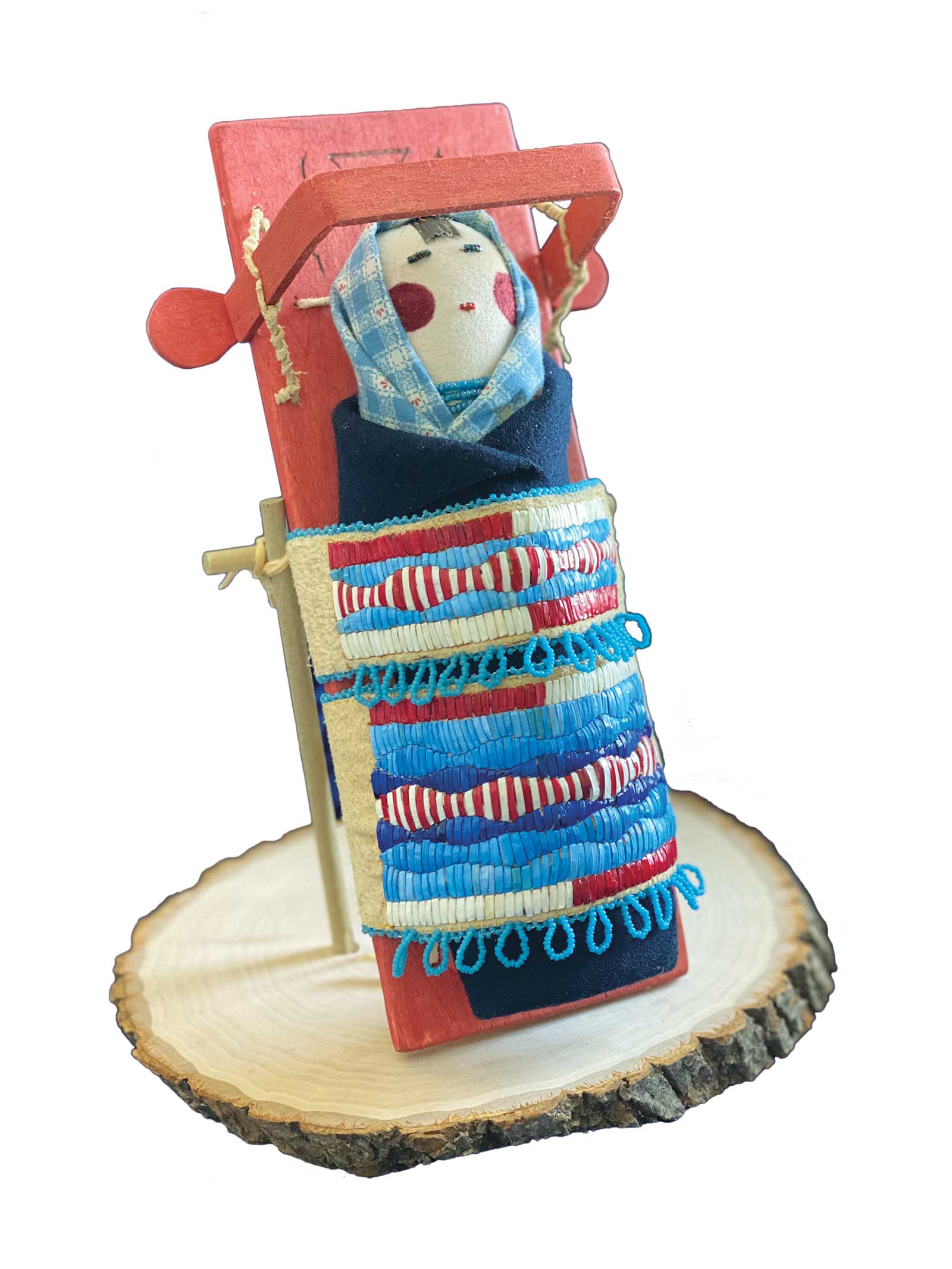
Born of the Waters, porcupine quills, quilled on smoked buckskin, cotton, muslin, human hair, vintage glass seed beads, carved out bass wood, 7 x 3 x 3”
The artist says that time and effort, as well as money, that goes into getting quills has likely led to a lull in the art of quillwork. “It is not done as much as it has been in the past,” he adds. “It’s harder to find artists who use quills regularly.”
Once an artist has the quills, there are many steps that must happen before a quill is usable in art. For instance, quills are naturally oily from the porcupine, so they have to be lightly washed so the oil can be removed and the quills will hold dye. And Taylor stresses the word “lightly.” “They are still quills, so they will stick you in you are not careful. I will often snip the barbs off so they’re easier to handle,” he adds.
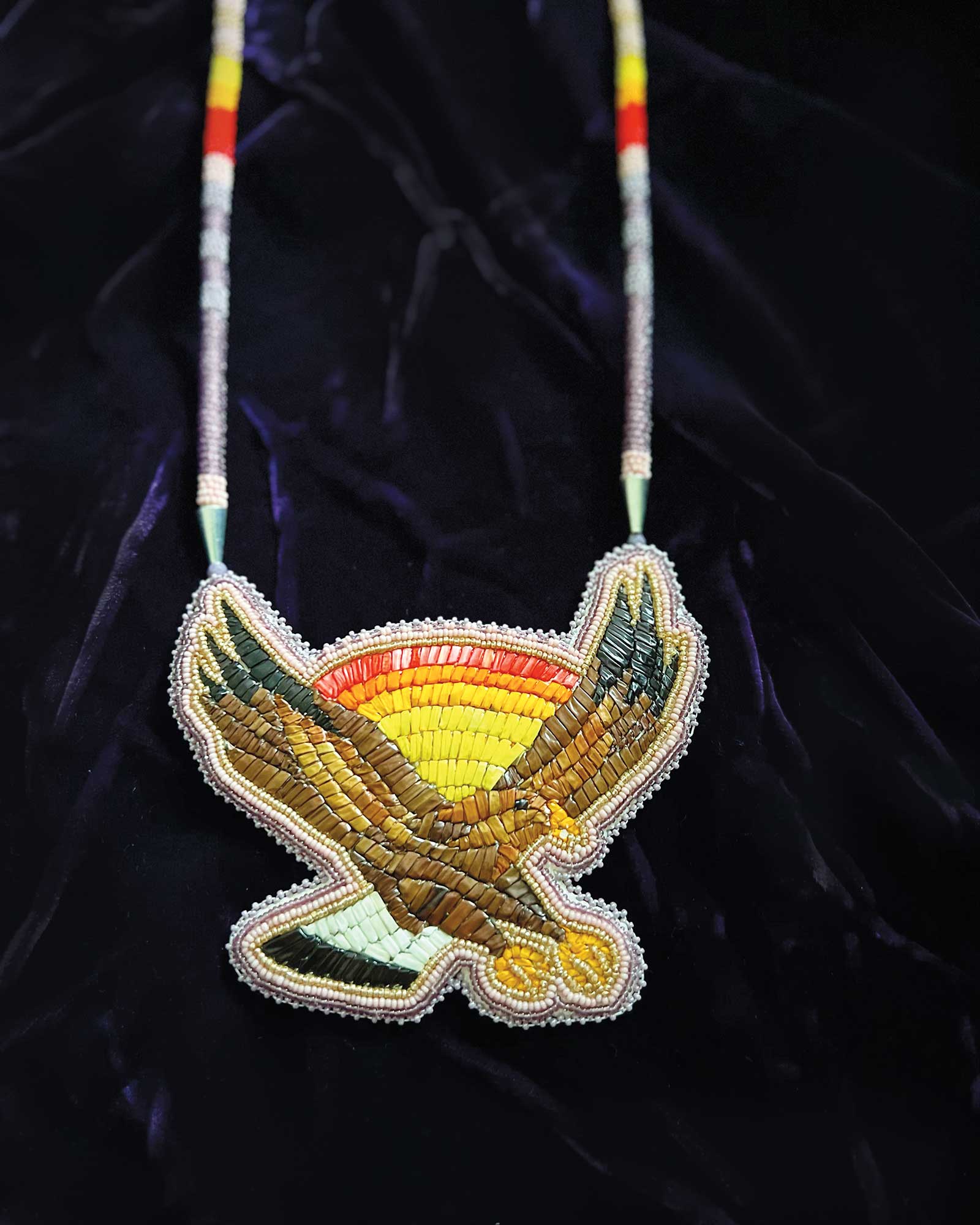
Wanbdi Anpo (Eagle Sunrise), Czechoslovakian size 13 seed beads, porcupine quills and backed with smoked buckskin, 3 x 4½”
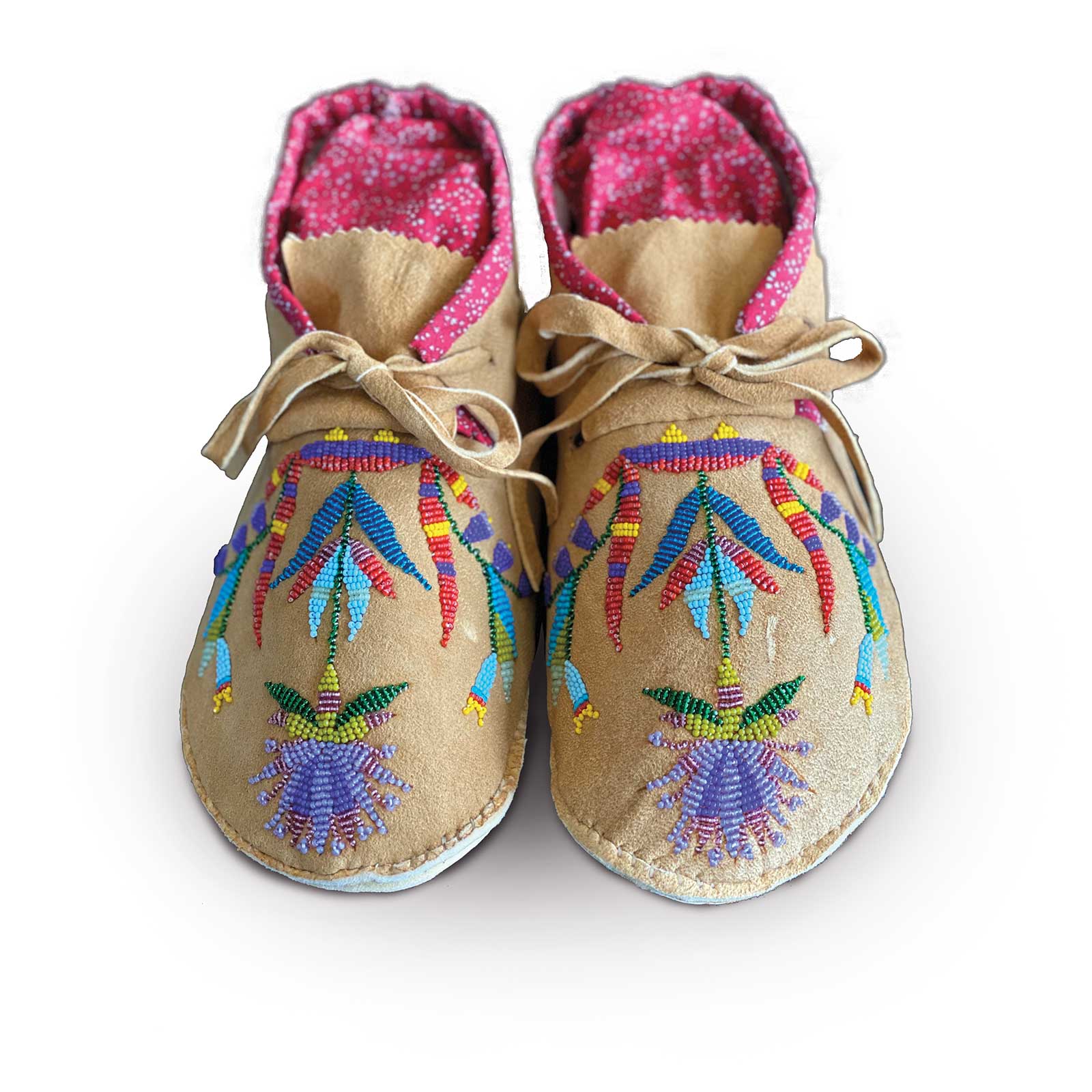
Elk Moccasins, smoked buckskin, Czechoslovakian size 13 glass seed beads, vintage and antique seed beads
Once they are cleaned, often using dish soap, the quills are sorted by size and shape, and then they are flattened. There are many techniques to do this, but Taylor often uses the ancient method that still works today—he flattens them using his teeth. From there he can dye them and apply them into his artwork.
From there, multiple techniques can be used, including an embroidery process, in which the quills are sewed down to the base material; a wrapping technique, where the quills are wrapped to create thin strips; and also plaiting, which is similar to a braiding technique.
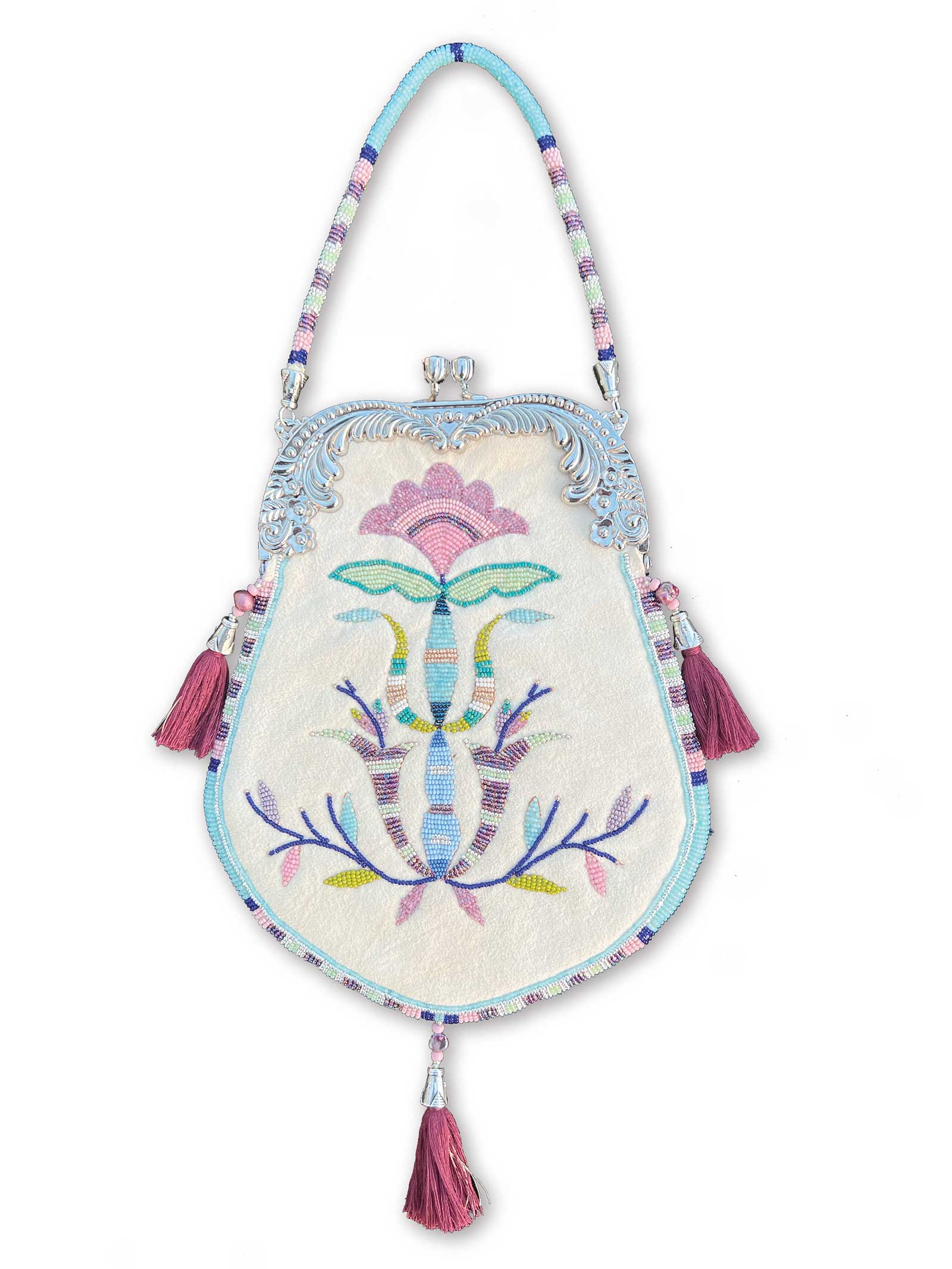
All That Jazz, smoked buckskin, contemporary made purse clasp, sterling silver beads
Taylor learned much of what he knows about quillwork from master artists Dave and Myrna Louis. “Dave always told, ‘Teach everyone you can because this is a dying art form.’ He believed that these techniques and tricks of the trade should not be secret or else they would go away and that would be heartbreaking,” Taylor says. “He did not want this to go extinct.”
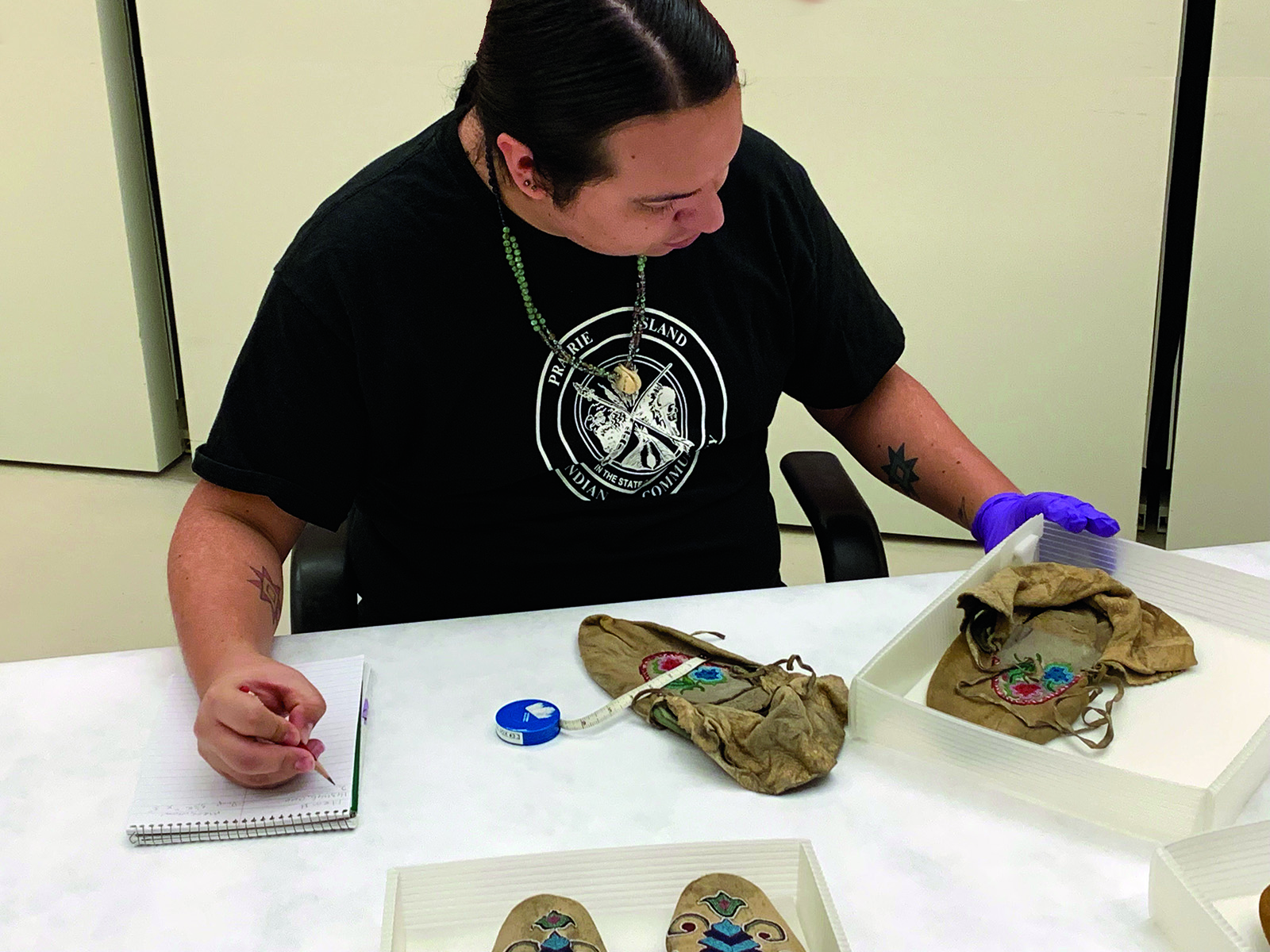
Cole Redhorse Taylor researching historic material at the National Museum of the American Indian.
Some of his new quillwork includes miniature cradleboards with exquisite and quite modern designs in red, white and blue; an eagle pendant with a variety of colors, including a bright yellow sunset; and a knife sheath with a wavy pattern in red. His beadwork also includes many animals, such as elk and lynx. Much of his work shows flowers and other plants, a design motif known as Dakota Floral.See More www.artbyredhorse.com • instagram:@coleredhorsejacobson
Powered by Froala Editor